Membrane condition
The contractor looks for splits, punctures, open seams, loose flashing, shrinkage, and areas where water may be getting beneath the membrane.
Serving Columbus, Ohio & surrounding areas
Calls answered around the clock
Rubber roofing in Columbus, Ohio
One call connects you with a local contractor who handles rubber roofing for flat and low-slope roofs.
Flat and low-slope roof systems
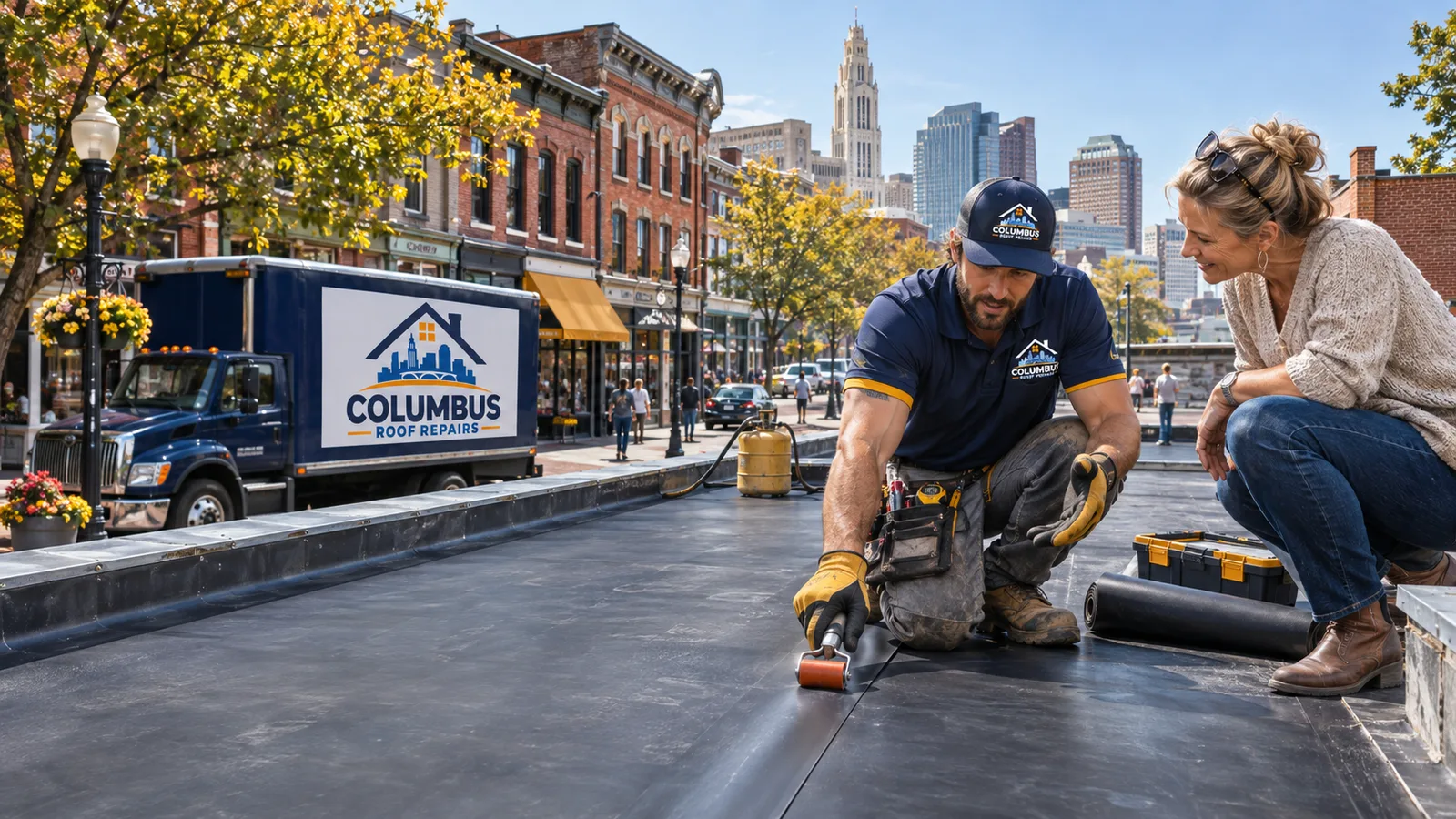
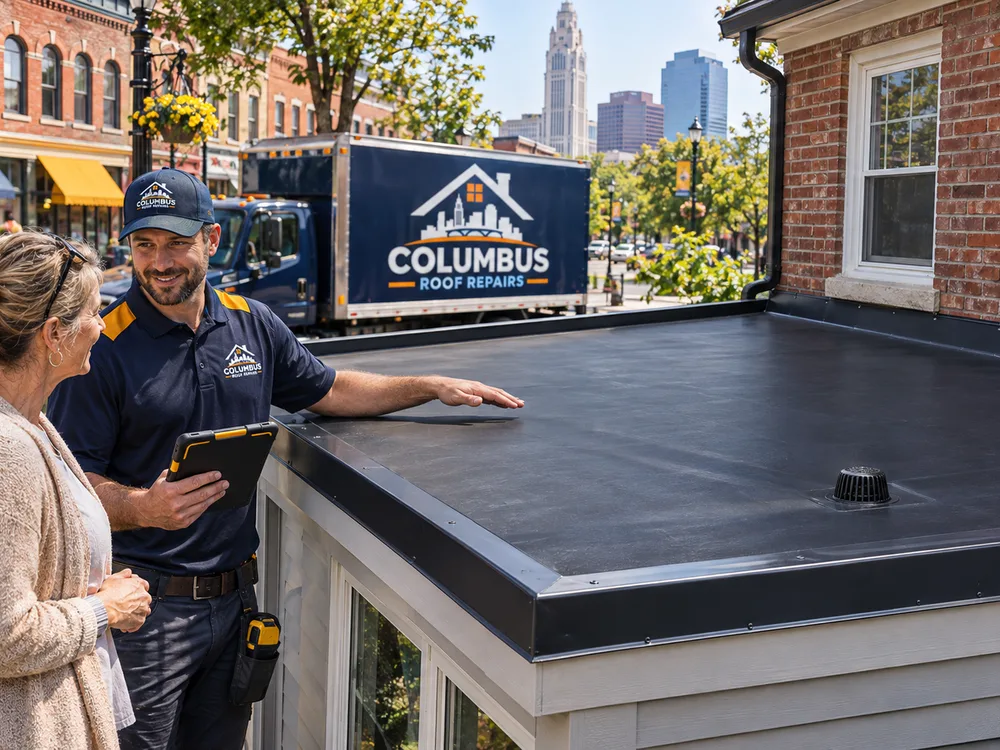
Rubber roofing Columbus Ohio homeowners search for usually means a membrane system for a flat or low-slope roof. These roofs need a continuous waterproof surface, carefully sealed seams, secure edge metal, and drains or scuppers that move water off the roof. A local contractor can determine whether the roof needs a focused repair, a membrane overlay where appropriate, or full replacement after the existing roof and deck are examined.
EPDM is a common rubber roofing material. It is typically installed as a large membrane with adhered, mechanically attached, or ballasted methods depending on the building and roof design. Seams, penetrations, wall transitions, rooftop equipment curbs, and perimeter edges need close attention because they are frequent leak points. Columbus weather brings rain, snow, freeze-thaw cycles, and summer sun, which can stress aging seams and flashing.
Older homes in areas such as German Village and Victorian Village can have additions, porches, or rear roof sections with low slopes that need different detailing than the main pitched roof. In the Short North, mixed-use buildings and attached structures may have low-slope sections around parapet walls and rooftop equipment. The contractor can assess the roof configuration rather than treating every flat roof as the same job.
Columbus Roof Repairs connects callers with local roof companies serving Columbus who handle this kind of work. You speak with the contractor directly about the roof, the visible conditions, and the next step.
Low-slope roof inspection
The contractor looks for splits, punctures, open seams, loose flashing, shrinkage, and areas where water may be getting beneath the membrane.
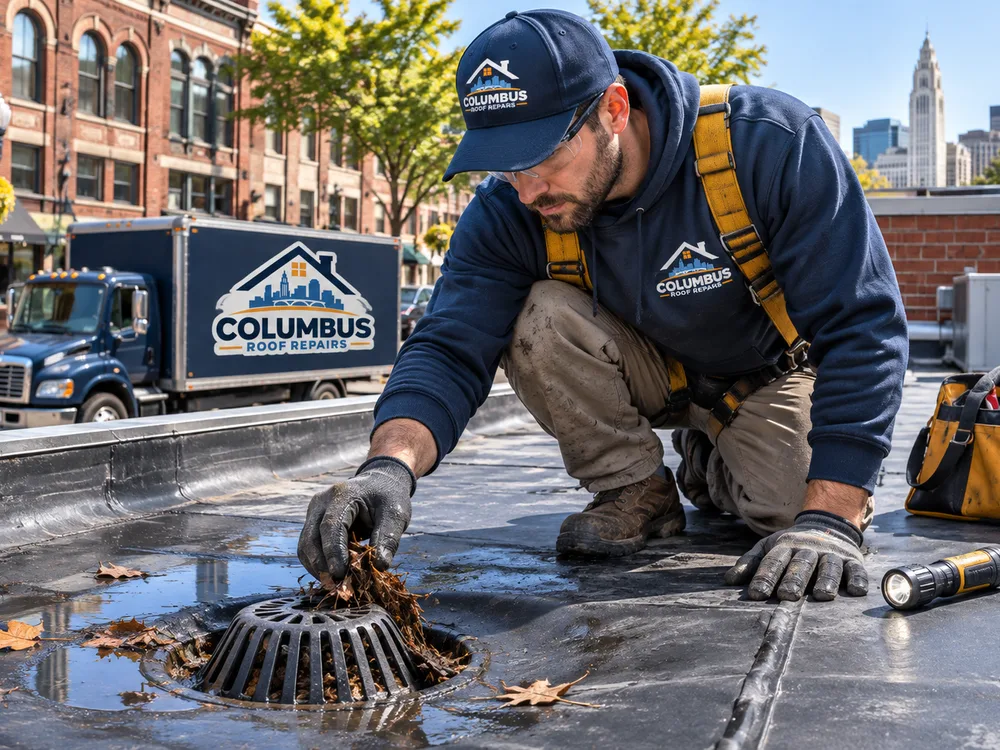
Flat roofs are built with slope, even when that slope is subtle. Drains, scuppers, gutters, and low areas are checked for standing water and restricted flow.
Soft areas, staining below the roof, and repeated leaks can point to moisture in the deck or insulation. The roof assembly may need to be opened to confirm the extent.
Parapet walls, pipe boots, vents, skylights, equipment curbs, and edge metal need compatible flashing details to keep the membrane watertight.
One local connection point
Calls are answered around the clock for homeowners looking for rubber roofing help.
Enter your ZIP code and you are connected with a local contractor who serves that area.
Discuss the roof condition, arrange a time to look at it, and get the contractor's recommendation and quote directly from them.
The contractor explains the proposed work, materials, and timing. You decide whether to proceed.
Membrane work and drainage
Answers before you call
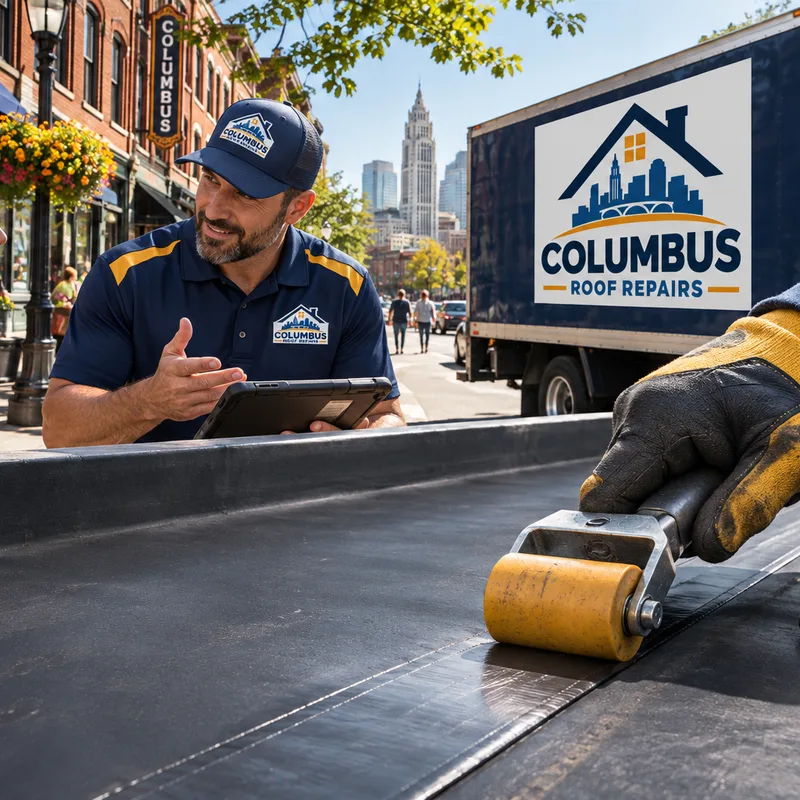
The condition of the membrane and the roof assembly determines the right approach. A contractor looks at the size and location of damage, seam failures, recurring leaks, drainage, flashing, and signs that moisture may be beneath the membrane. Localized punctures or open seams may be repairable, while widespread deterioration or wet materials below the surface can point toward replacement.
A contractor should inspect the membrane, seams, perimeter edges, penetrations, drains, scuppers, and any areas where water collects. They may also look inside for staining or soft spots and assess whether the roof deck or insulation has been affected by water.
EPDM is one membrane option, but the roof design and existing conditions may also lead to discussion of other low-slope systems. The contractor can explain material compatibility, seam methods, flashing details, and whether the existing roof can remain in place or should be removed.
The work usually begins with protecting the area around the building and removing the existing roofing where needed. The contractor examines the deck, addresses damaged materials, installs insulation or cover board if the roof design calls for it, then installs the membrane, seams, flashing, and edge details. The contractor can explain access, debris handling, and the expected job sequence for your roof.
Ask what caused the leak or deterioration, whether moisture is suspected below the membrane, which material and attachment method fit the roof, how seams and penetrations will be detailed, and what warranty terms apply. Ask for the contractor's written scope and quote so you can compare the recommended work with the condition they observed.
Columbus rubber roofing connection
Call and get connected with a local contractor who serves your area. You talk with the contractor directly about the condition of your flat or low-slope roof and decide what happens next.